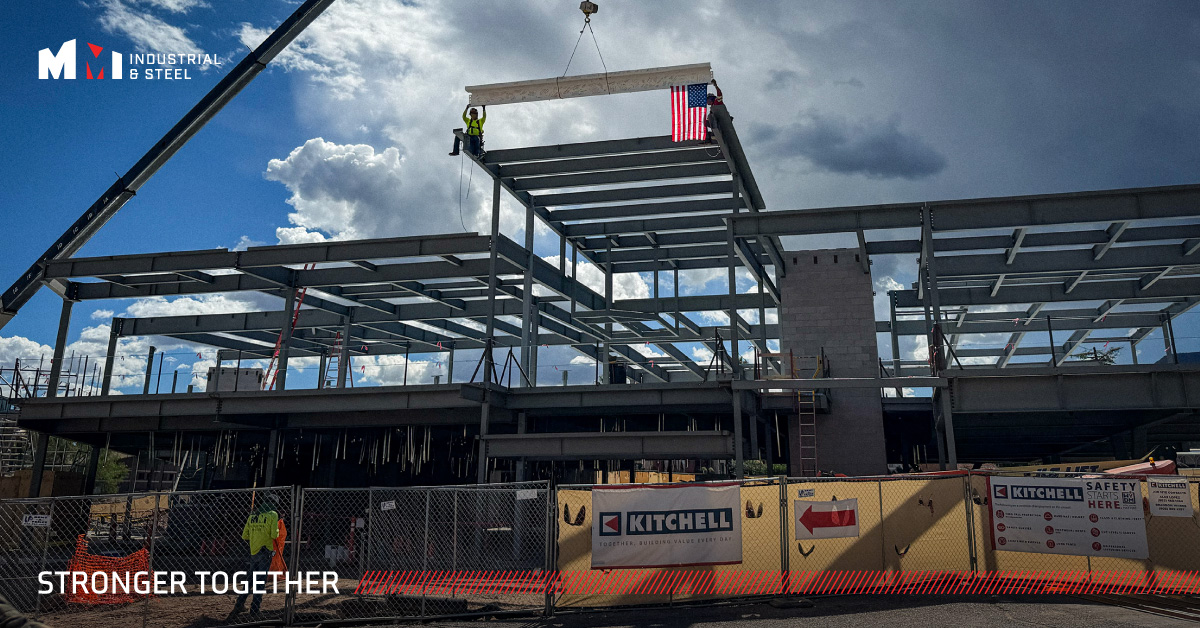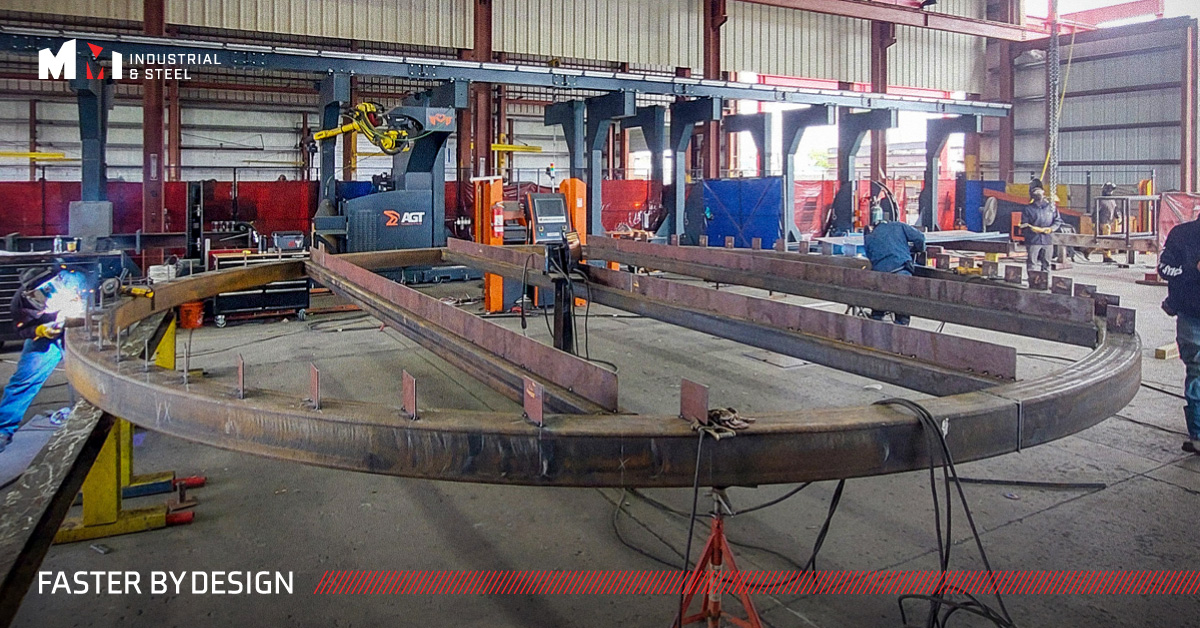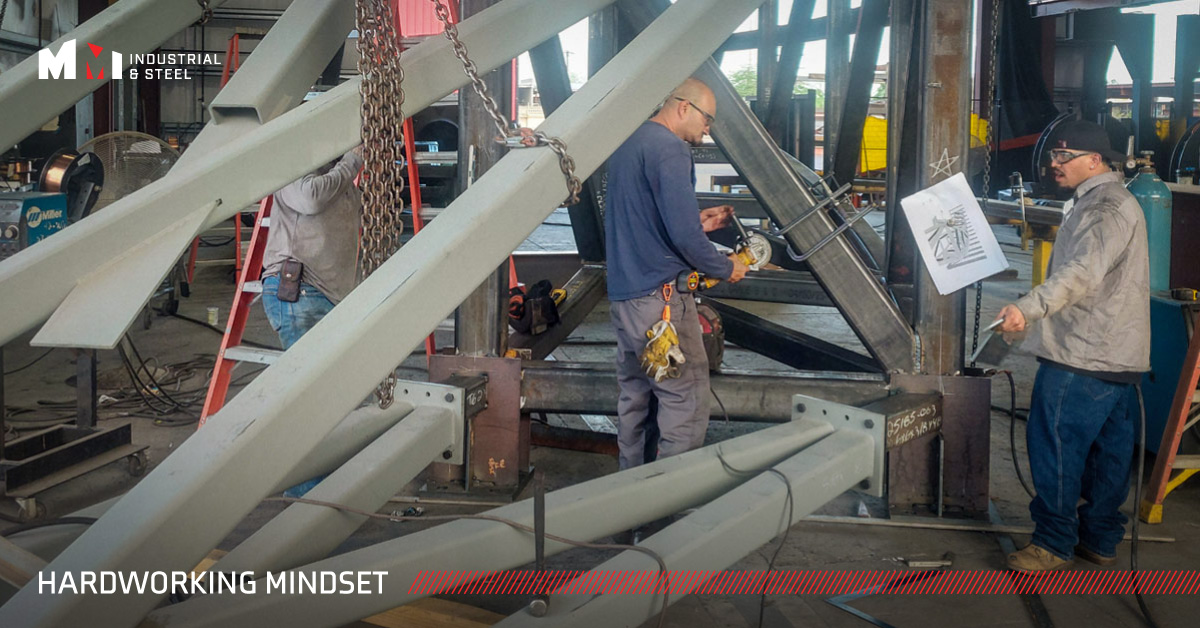
When people think about steel, they think about a material that offers strength, durability, and precision. But at MMI Industrial & Steel, we’ve learned that steel is more than a product. It’s a responsibility.
Nothing has brought this lesson to life more than working on civic and public projects. In these projects, every beam, column, connection, and weld contributes to a structure that a community may depend on for decades. Yes, the materials must be strong and the work must be precise, but every job must also be completed with integrity, accountability, and respect for the people it will ultimately serve.
Among the values that guide our work at MMI, one has proven especially important on civic projects: honorable.
Building for the Public Means Answering to Everyone
Private and public construction projects share many of the same technical demands, but civic work carries a different kind of weight.
Schools, community centers, municipal facilities, and other public buildings are not simply structures. They are places where people learn, work, gather, receive services, and build connections.
Because of this, the quality of the work has a widespread, lasting impact. When we contribute to a public project, we are accountable not only to the client and the contract, but also to:
- Students and teachers who will occupy the space
- Parents who trust that the environment will be safe
- Taxpayers who help fund the project
- Employees and public servants who use the facility
- Communities that may rely on the building for generations
That level of accountability demands more than technical expertise. It requires integrity in every decision, including the decisions that may never be noticed once the project is complete.
What It Means to Be Honorable in Our Work
Being honorable is not limited to meeting specifications or fulfilling contractual obligations. Being truly honorable means doing what is right, even when the right choice is harder, slower, or less visible.
On civic projects, that level of commitment can show up in many ways:
- Communicating honestly when challenges arise
- Remaining transparent about schedules, costs, and changes
- Taking ownership when mistakes happen
- Protecting quality when timelines become tight
- Raising concerns rather than allowing problems to go unaddressed
- Respecting the people who will use the building, not just the immediate scope of work
In construction, shortcuts are never acceptable. But in public construction, cutting corners doesn’t just jeopardize a schedule or a budget—it can affect the people who enter that building every day.
People depend on our ability to do the job well, and we have a responsibility to meet that standard. Being honorable means ensuring that every beam, weld, and decision reflects that responsibility.
Schools Raise the Stakes
School construction has been one of the most meaningful (and demanding) areas of our civic work.
A school is not just another building. It is a place where children develop their sense of safety and belonging, teachers dedicate themselves to shaping young minds, and communities invest in their future.
That purpose changes the way the work should be approached.
On a school project, being honorable means asking questions that go beyond minimum requirements:
- Is this safe (not merely compliant)?
- Is it built to withstand years of heavy use?
- Have we considered how the finished space will function every day?
- Would we trust our own families inside this building?
School projects also come with significant logistical pressures. Deadlines are frequently tied to the academic calendar, leaving little room for delays. Budgets must be carefully managed because public funding is involved. Work may need to be completed around occupied campuses. And most importantly, safety standards are non-negotiable.
Under those high-pressure conditions, integrity becomes the foundation that keeps the project aligned. Deadlines and project demands may change the pace of the work, but they cannot be allowed to change the standard of quality.
Lessons from the Field
Over the years, our experience with civic and school projects has reinforced several important truths.
1. Integrity Builds Trust Faster Than Steel
Drawings, schedules, and contracts establish the framework of a project, but trust is what allows teams to work through challenges effectively.
When owners, contractors, architects, and trade partners know that a team will communicate honestly and follow through on its commitments, the entire project benefits: collaboration becomes easier, problems can be addressed earlier, and decisions can be made with more confidence.
2. The Right Choice Is Not Always the Easy One
Honorable decisions sometimes carry a short-term cost:
- Details may need to be reworked.
- Concerns may need to be raised, even if they could affect the schedule.
- Mistakes may need to be acknowledged and corrected.
Those choices may be uncomfortable in the moment, and they may have real impact on the project schedule or budget. But every choice, even the hard ones, should be made in the best interest of the project as a whole. Ultimately, teams need to make honorable decisions in order to protect the project—and the people it serves—in the long term.
3. The End User Deserves a Voice
Students, teachers, employees, families, and community members are rarely present in project meetings. Even so, their needs should influence the decisions being made.
Being honorable means considering the experience of the end user, even when that person is not in the room. It means remembering that the finished structure is not simply a collection of materials and specifications. It is a space people will rely on every day.
4. Quality Is a Form of Respect
Quality workmanship demonstrates respect—for the client, the project team, the public investment, and the people who will use the building.
Delivering a structure that performs reliably for decades is one of the most tangible ways to honor a community. The work may eventually be hidden behind walls, ceilings, and finishes, but its quality will continue to matter long after the construction team has left the site.
Steel That Truly Serves
Steel is only as meaningful as the purpose it serves.
On civic and public projects, that purpose is clear: to create safe, dependable spaces that support communities and improve everyday life.
MMI’s commitment to being honorable keeps us focused on more than simply completing the job. It calls us to work with integrity, communicate openly, take responsibility, and maintain pride in every detail.
Because when we build schools, municipal facilities, and public spaces, we are not just shaping steel. We are shaping the environments where people learn, gather, serve, and build their futures.
That is a responsibility we are proud to carry—and one we carry with honor.
At MMI, we’re proud to build steel structures that serve communities for generations. When your civic or public project demands a partner committed to quality, accountability, and doing what’s right, our team is ready to help.