In industrial environments, material handling systems—especially conveyor systems—often determine whether production stays on schedule or grinds to a halt. When the equipment stops working, production stops too.
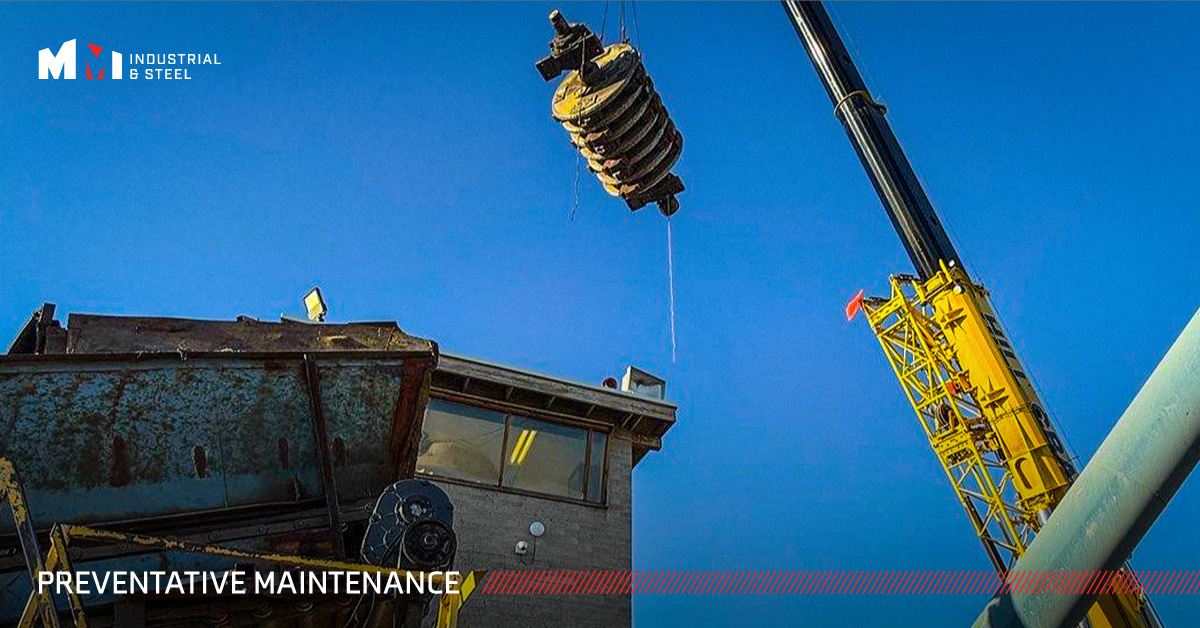
Traditional maintenance on this equipment is time-based or reactive; it’s only done when a problem arises or when the schedule requires it. But as industrial operators face increasing pressure to maximize uptime and operational efficiency, it’s becoming clear that these traditional strategies are often too little, too late.
Instead, modern research and real-world industry reporting increasingly point to predictive maintenance as one of the most effective strategies for improving reliability and reducing downtime in conveyor-driven facilities.
The Shift Toward Predictive Maintenance: What Industry Experts Are Saying
Industry publications across sectors consistently highlight predictive maintenance as a key driver of operational modernization. In fact, predictive maintenance is shifting from a “nice-to-have” luxury to a proven, scalable strategy.
Research has shed some light on the most promising benefits of predictive maintenance, including:
- Identifying equipment failure before it occurs. International Mining reports that conveyor systems equipped with vibration and temperature sensors can detect early signs of idler, pulley, and gearbox failure—well before they occur. Predictive maintenance can significantly reduce unplanned stoppages. Their report also notes that remote monitoring has become especially essential as conveyor lengths increase and mine sites become more complex.
- Eliminating unnecessary service. Reliabilityweb.com (Uptime Magazine) emphasizes that AI‑powered diagnostics and condition‑based monitoring systems help eliminate unnecessary maintenance, saving time and money. They also point out that such systems often detect issues that are invisible in traditional visual inspections, and can uncover failure patterns that develop over time.
- Extending equipment life and improving overall performance. Manufacturing.net focuses on the big picture: companies adopting predictive maintenance are seeing fewer line stoppages, better safety performance, and longer equipment lifespans. This implies that the benefits of predictive maintenance benefit companies at every level.
The conclusion from these publications is clear: predictive maintenance is no longer experimental. It’s a proven, scalable methodology that is delivering measurable results in real-world environments.
Sector‑Specific Benefits Backed by Industry Reporting
Predictive maintenance delivers value across industries, but its impact is especially significant in conveyor-driven operations. Consider the value of predictive maintenance in these sectors:
Agriculture & Grain Handling
In grain-handling facilities, early detection of bearing failure or belt misalignment in conveyor systems and bucket elevators helps reduce the risk of contamination and costly harvest-season shutdowns. Publications such as Grain Journal and Farm Progress have shown how predictive tools allow operators to address issues before they disrupt critical seasonal throughput.
Mining
Mining operations rely on conveyors that carry extreme loads across long distances, often in remote and/or abrasive environments. The consequences of equipment failure are very real and often severe. International Mining notes that predictive monitoring and real-time diagnostics help identify pulley wear, idler seizing, and structural stress before they escalate into more serious problems, helping to create a safer, more reliable work environment.
Aggregates, Sand & Gravel
In crushing and screening operations, even minor conveyor issues—like belt tracking problems or a single seized idler—can cause unnecessary stoppages, according to Pit & Quarry. Sensor-based health tracking enables crews to correct small problems before they become major bottlenecks.
Cement Production
According to World Cement, high-heat, high-dust environments accelerate wear on conveyors, bucket elevators, motors, and gearboxes. Predictive maintenance helps cement plants monitor material handling systems feeding kilns and mills, reducing downtime and disruptions.
Manufacturing
In modern manufacturing environments with smart factory strategies, predictive maintenance has become mainstream, according to publications like Manufacturing Tomorrow. Sensors on conveyor motors, drives, and rollers feed data into analytics platforms that detect issues early, helping factories maintain consistent production.
The Business Value: Why Predictive Maintenance Pays Off
Across all sectors, the data tells a consistent story that makes a strong case in favor of predictive maintenance.
Facilities that adopt predictive maintenance strategies report:
- Reduced unplanned downtime through early detection
- Lower operating and maintenance costs by avoiding unnecessary repairs
- Extended equipment lifespan through condition-based service
- Improved safety by reducing emergency interventions or equipment malfunctions
- Higher throughput and productivity
In short, in today’s competitive industrial landscape, predictive maintenance is quickly becoming a strategic necessity rather than an optional upgrade.
How MMI Industrial & Steel Supports Predictive Maintenance
At MMI Industrial & Steel, we help facilities apply predictive maintenance in practical, field‑tested ways. By integrating condition monitoring strategies into conveyor systems, mechanical equipment, and custom industrial solutions, we help clients gain a strategic competitive advantage—while increasing reliability, reducing downtime, and improving operational efficiency.
Our approach aligns real-world operating conditions with proven insights from current research and publications, giving our clients modern maintenance programs that yield measurable, lasting results.
Predictive maintenance doesn’t just give operators more data—it gives them more control over their timelines, their costs, and their overall productivity.
Ready to reduce downtime and get more life from your equipment? Contact MMI Industrial & Steel today to learn how predictive maintenance can strengthen reliability, improve safety, and support long-term operational performance for your company.